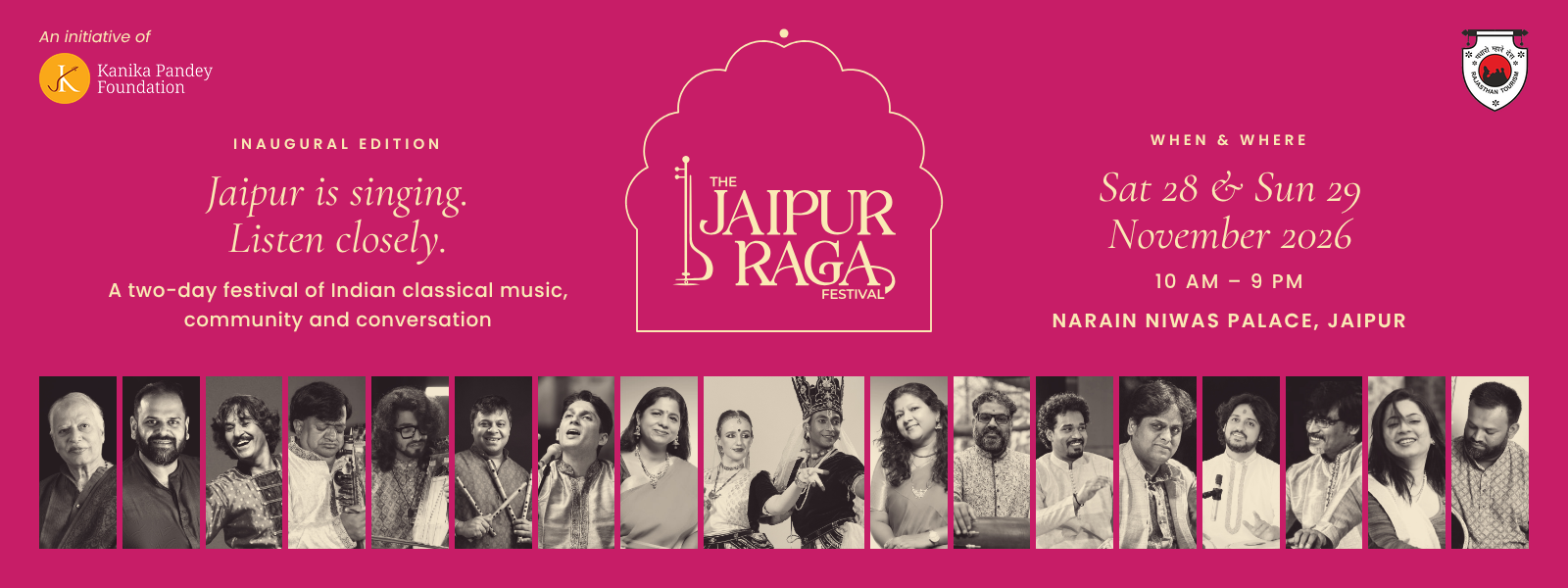
The Jaipur Raga Festival, Saturday 28 and Sunday 29 November 2026, 10 AM to 9 PM at Narain Niwas Palace, Jaipur

The Jaipur Raga Festival

an initiative of Kanika Pandey Foundation

28–29 November 2026 · 10 AM – 8:30 PM · Narain Niwas Palace, Jaipur

Two days of Indian classical music, from masters to the next generation.

  • 2 days
  • 5 concerts
  • 2 baithak sessions
  • 4 workshops and demos
  • Craft booths and food

The festival line-up

The artists

Meet the musicians, dancers and makers bringing their traditions to Jaipur. Explore the stories behind the performances.

17 artists & ensembles

  • Pt. Sajan MishraVocal

    Pt. Sajan Mishra

    Pt. Sajan Mishra is a Hindustani classical vocalist of the Banaras gharana and a recipient of the Padma Bhushan. For decades he sang with his brother, the late Pt. Rajan Mishra, as one half of the duo known to listeners as Rajan and Sajan Mishra. Their form is khayal, in which a raga is unfolded slowly, phrase by phrase, before the tempo rises. At The Jaipur Raga Festival he sings with his son, Swaransh Mishra, in the closing concert. Listen for two generations of one family sharing one stage.
  • Pt. Rajendra GanganiKathak

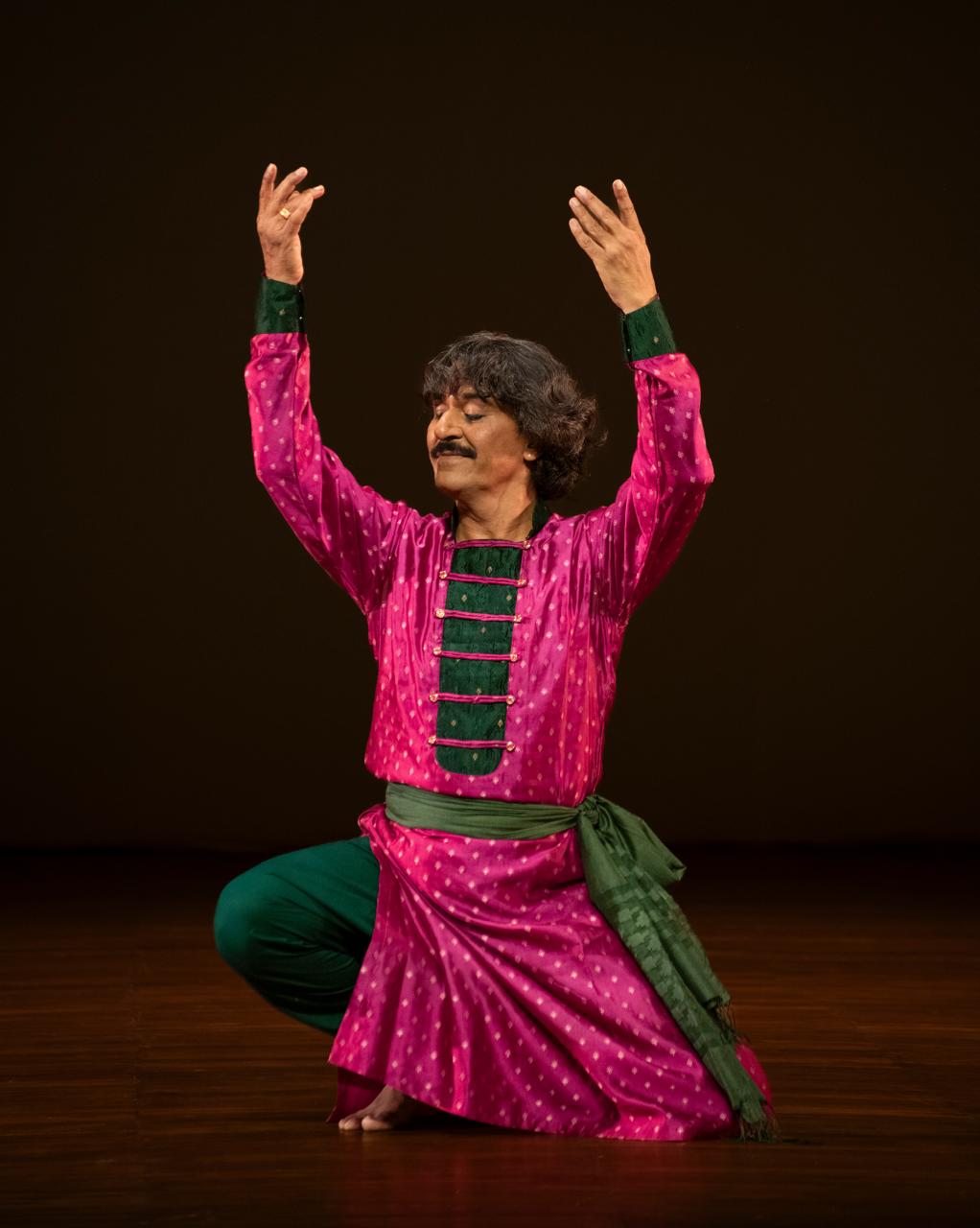
    Pt. Rajendra Gangani

    Pt. Rajendra Gangani is a leading exponent of the Jaipur gharana of Kathak, one of the major schools of the dance and the one that carries this city's name. He received the Sangeet Natak Akademi Award in 2003. Kathak is a classical dance of North India that tells stories through rhythm, footwork, spins and expression. His performance at The Jaipur Raga Festival brings the Jaipur gharana home to the city it is named after, on the festival's first evening.

  • Ustad Moinuddin KhanSarangi

    Ustad Moinuddin Khan

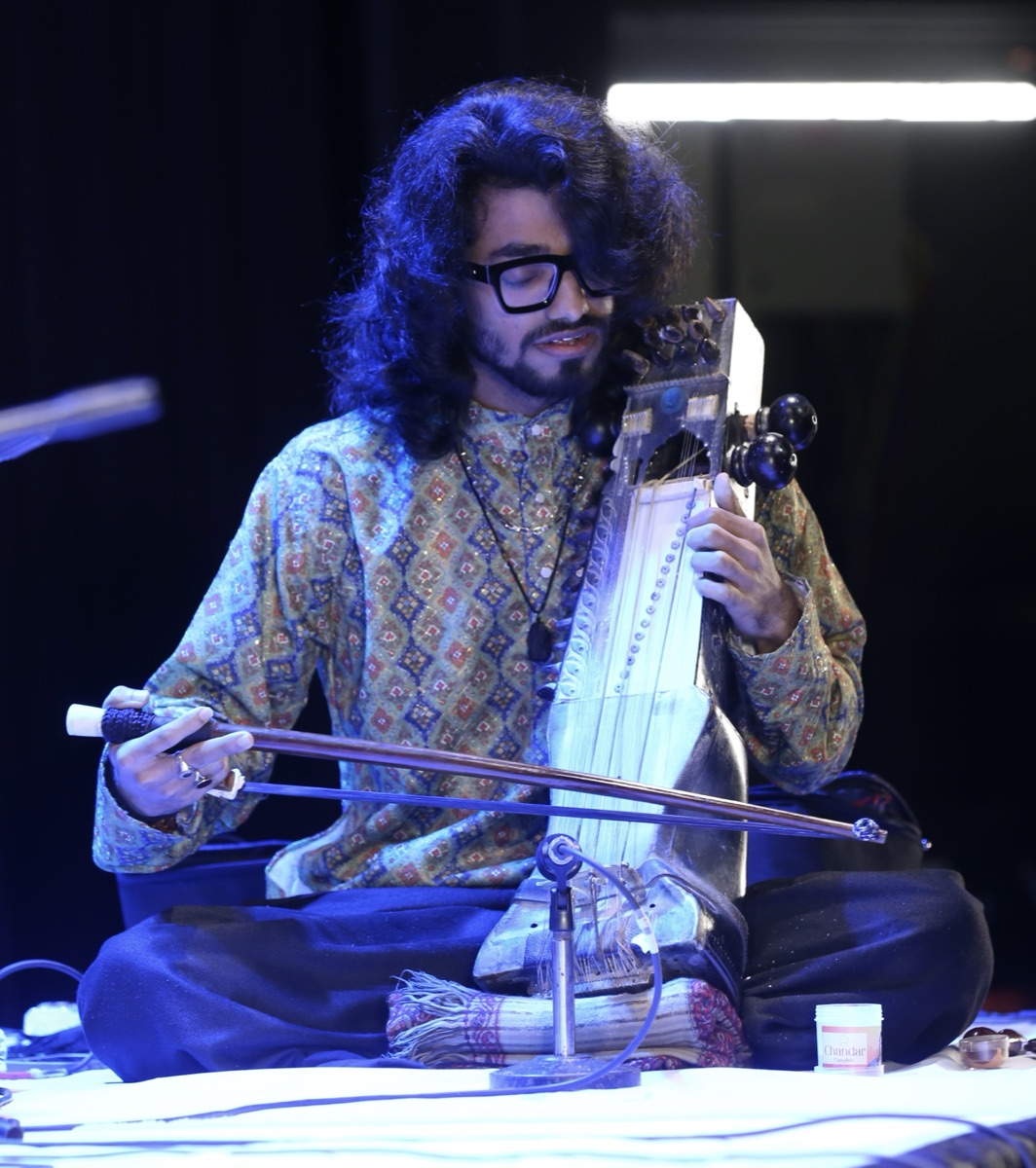
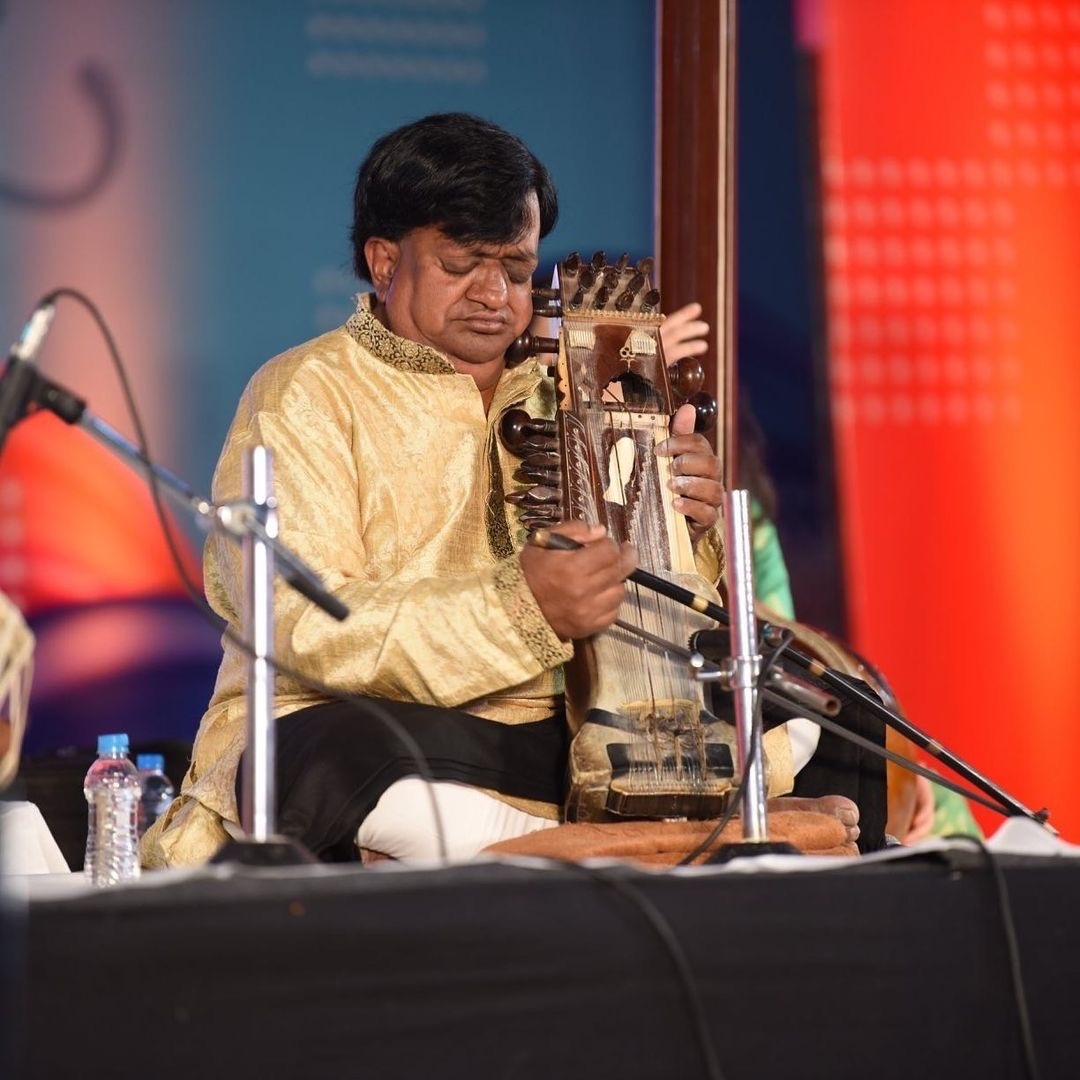
    Ustad Moinuddin Khan is a sarangi player of the Jaipur gharana, born in Jaipur into a family that has played the sarangi for generations. He received the Padma Shri in 2014. The sarangi is a bowed string instrument often described as the closest of all instruments to the human voice, and it has long been central to Hindustani music. At The Jaipur Raga Festival he plays a sarangi duet with his son, Momin Khan, in the intimate setting of a baithak.

  • Sh. Shashank SubramanyamCarnatic flute

    Sh. Shashank Subramanyam

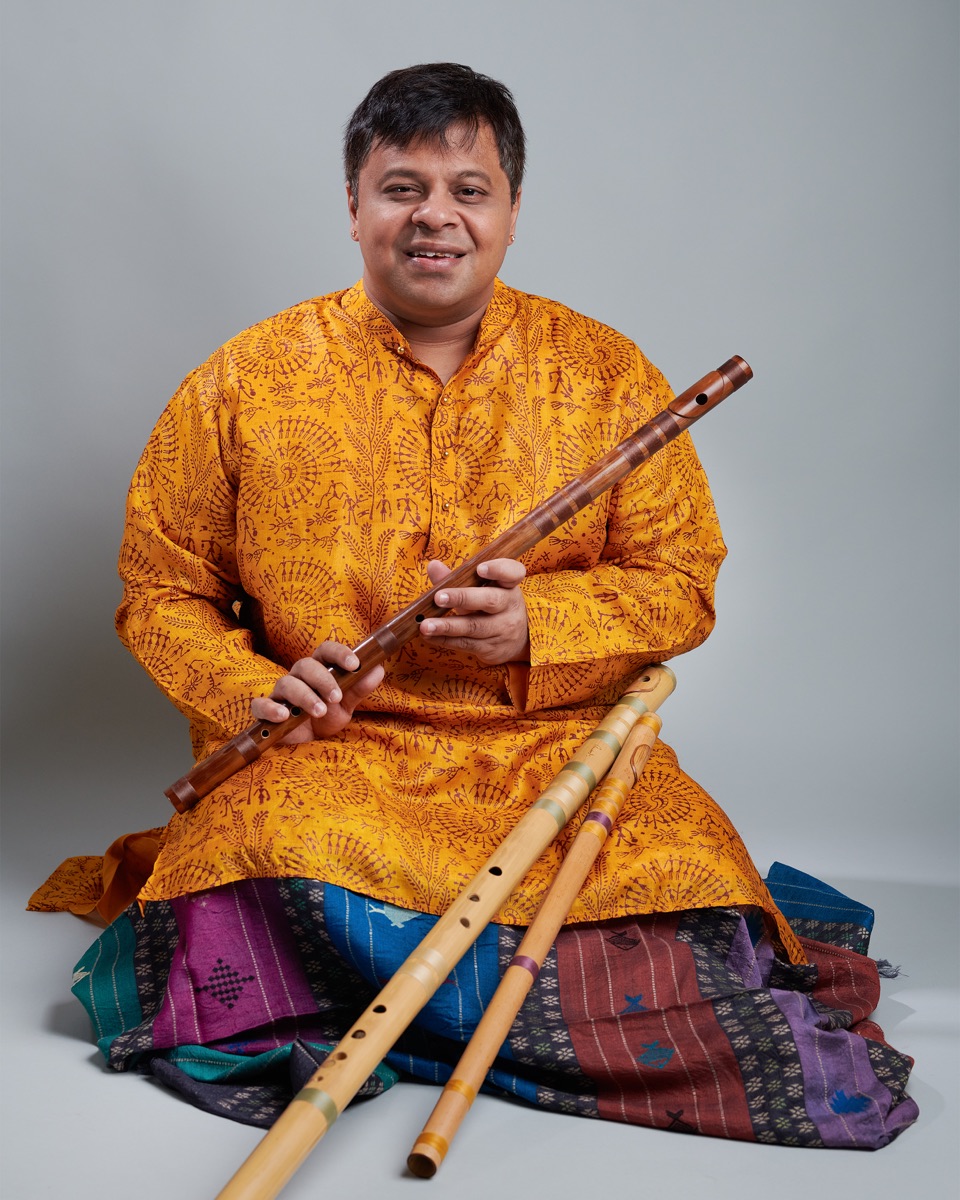
    Sh. Shashank Subramanyam is a Carnatic flautist who has taken South Indian classical music to audiences in India and abroad. He received the Kalaimamani in 2001 and the Sangeet Natak Akademi Award in 2017. In 2009 he played on guitarist John McLaughlin's Grammy-nominated album, and in 2022 France named him a Chevalier des Arts et des Lettres. His concert is the first of the festival, bringing the sound of the Carnatic tradition to the Main Stage Lawn in Jaipur.

  • Dr. Pushkar LeleDevotional vocal

    Dr. Pushkar Lele

    Dr. Pushkar Lele is a Hindustani classical vocalist whose repertoire also takes in devotional music, among it the nirgun bhajan, songs addressed to a divine without form. He is a disciple of Pt. Vijay Sardeshmukh, a senior disciple of Pt. Kumar Gandharva, and earlier trained with Pt. Gangadharbua Pimpalkhare and Pt. Vijay Koparkar. At The Jaipur Raga Festival he appears twice: he leads a music appreciation workshop for listeners of every background, and he sings Sacred Sounds, a morning concert of nirgun bhajans on the Main Stage Lawn.

  • Sabina Islam & Sanjukta BiswasVocal

    Sabina Islam & Sanjukta Biswas

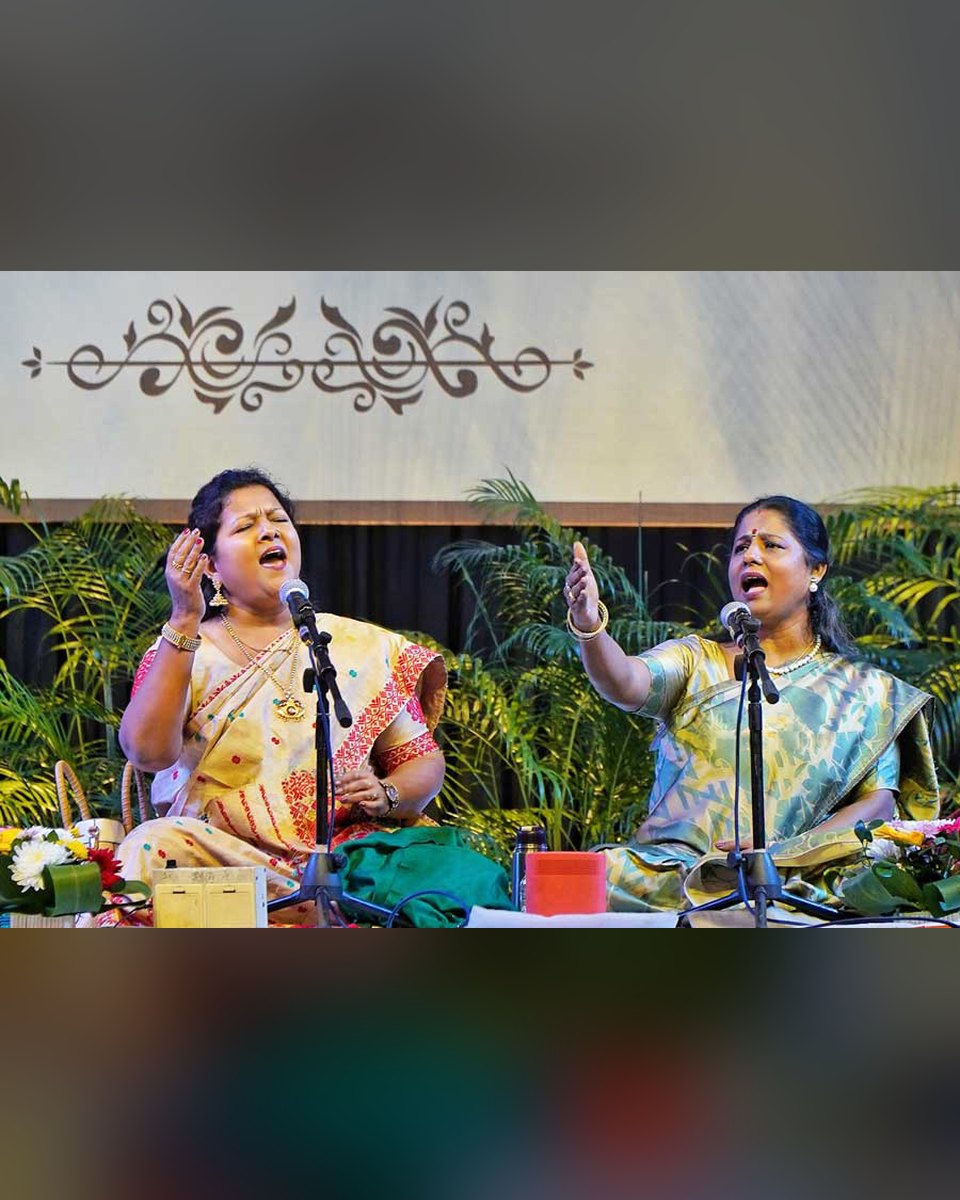
    Sabina Islam is a Hindustani vocalist of the Agra gharana, born in Guwahati. She is an A-grade artist of All India Radio and Doordarshan, and is empanelled with the Indian Council for Cultural Relations. At The Jaipur Raga Festival she sings a vocal jugalbandi with Sanjukta Biswas, a duet in which two singers share and exchange a raga between them. Their concert takes place in the baithak, the intimate, close-seated format in which classical music has long been heard.

  • Momin KhanSarangi

    Momin Khan

    Momin Khan is a sarangi player and the son of Ustad Moinuddin Khan of the Jaipur gharana. He is the eighth generation of his family to play the instrument. At The Jaipur Raga Festival he joins his father for a sarangi duet in the intimate baithak setting. In a duet of two bowed instruments, the players trade phrases, one leading and the other answering. Listen for that conversation as father and son share the same raga, two generations of one family on one stage.

  • Swaransh MishraVocal

    Swaransh Mishra

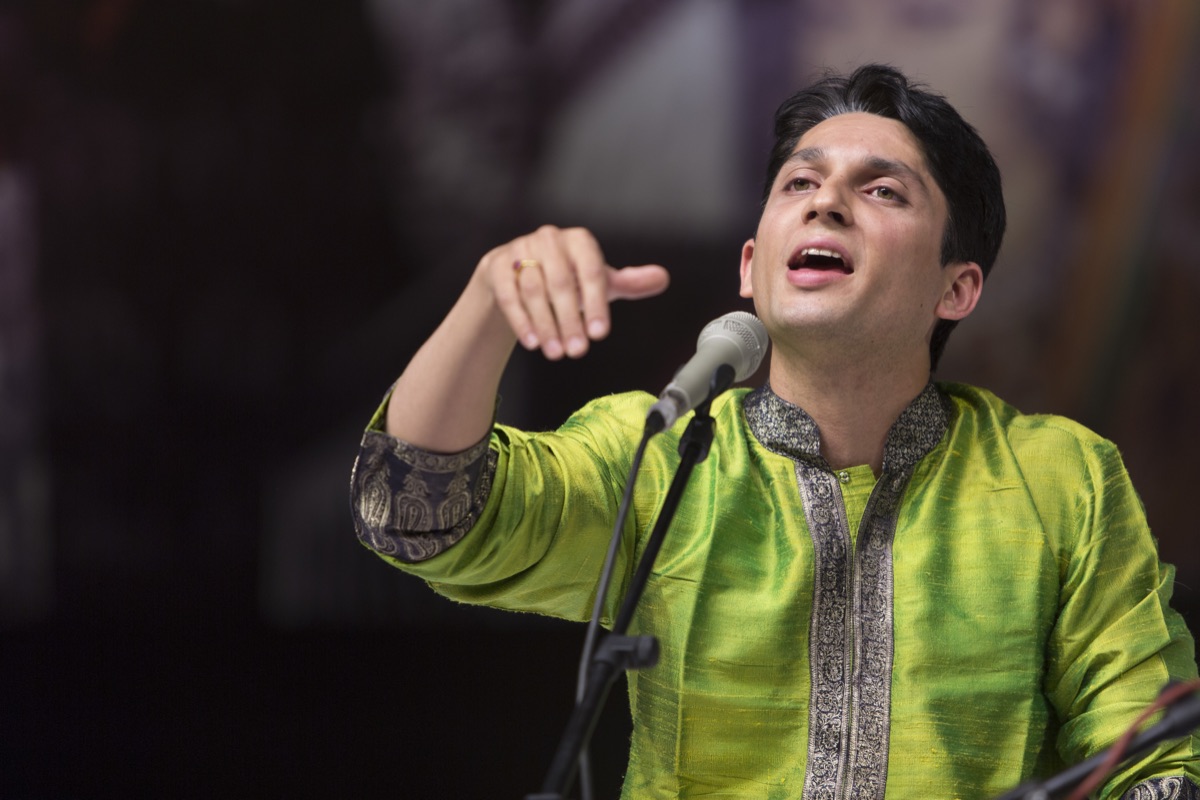
    Swaransh Mishra is a Hindustani classical vocalist and the son of Pt. Sajan Mishra of the Banaras gharana. Alongside classical singing, he plays guitar and synthesiser and composes. At The Jaipur Raga Festival he shares the stage with his father for the closing concert, a meeting of two generations of one musical family. In a vocal duet like this, the voices pass phrases between them, one beginning a line and the other completing it. Listen for that exchange in the festival's closing concert.

  • Rajendra BannerjeeHarmonium

    Rajendra Bannerjee

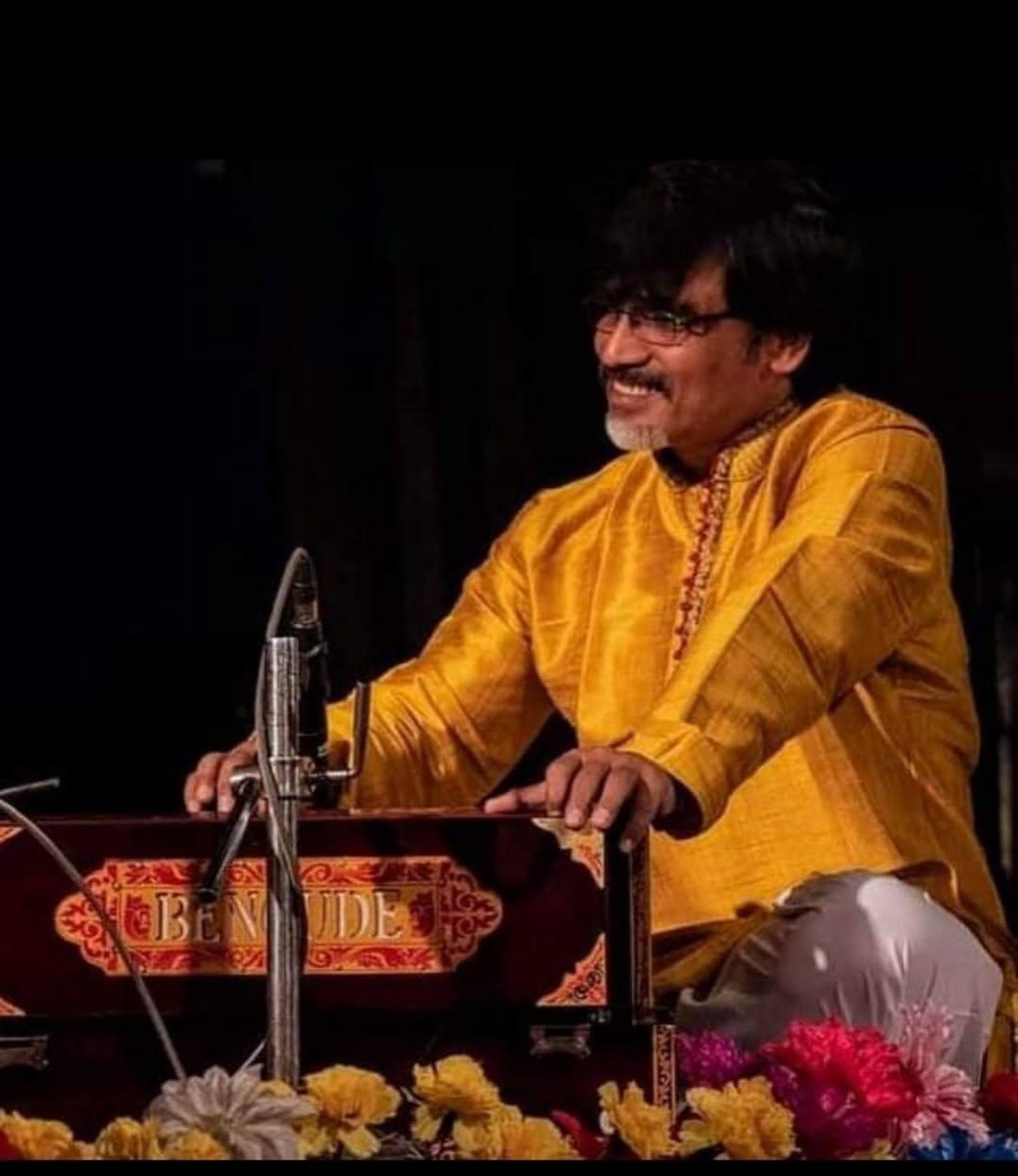
    Rajendra Bannerjee is a harmonium player and accompanist at The Jaipur Raga Festival. In Hindustani vocal music the harmonium follows the singer's melody closely, supporting each phrase and holding the shape of the raga beneath the voice. He accompanies the vocal jugalbandi of Sabina Islam and Sanjukta Biswas, one of the festival's two baithak sessions, on the first day. In a jugalbandi the harmonium follows two voices at once, as the singers pass the raga back and forth between them.

  • Perrine Legoullon and Partha Pratim HazarikaSattriya dance

    Perrine Legoullon and Partha Pratim Hazarika

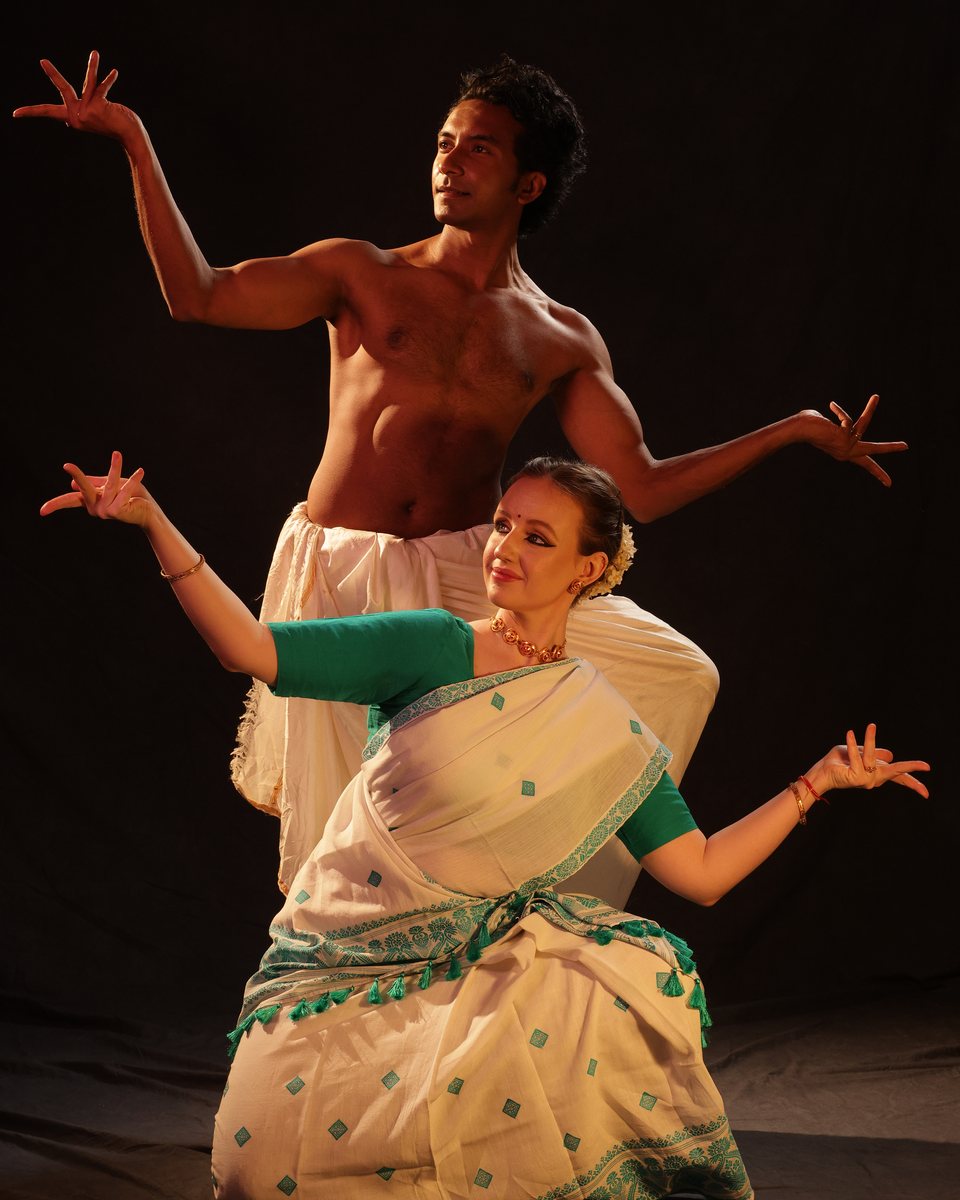
    La Compagnie Boga Bhokot is a French-Indian arts initiative co-founded by Sattriya dancer and actor Partha Pratim Hazarika and French-born Indian classical dancer Perrine Legoullon. It works to carry the Sattriya tradition beyond the borders of Assam through performance, transmission and intercultural collaboration, while honouring the roots and integrity of the form. Working at the intersection of tradition and contemporary performance practice, it presents Sattriya across India and seeks to build lasting artistic connections between India and Europe.

  • NaeemSitar maker

    Naeem

    Naeem is a sitar maker from Miraj in Maharashtra, a town known for sitar making. He brings to The Jaipur Raga Festival the craft behind the music: the shaping, assembly and care of instruments like those played on stage. On the first day he leads a live demonstration of instrument making on the open lawns. On the second day he leads a workshop on instrument maintenance at the poolside booth, showing how a sitar is looked after so that it keeps its sound.

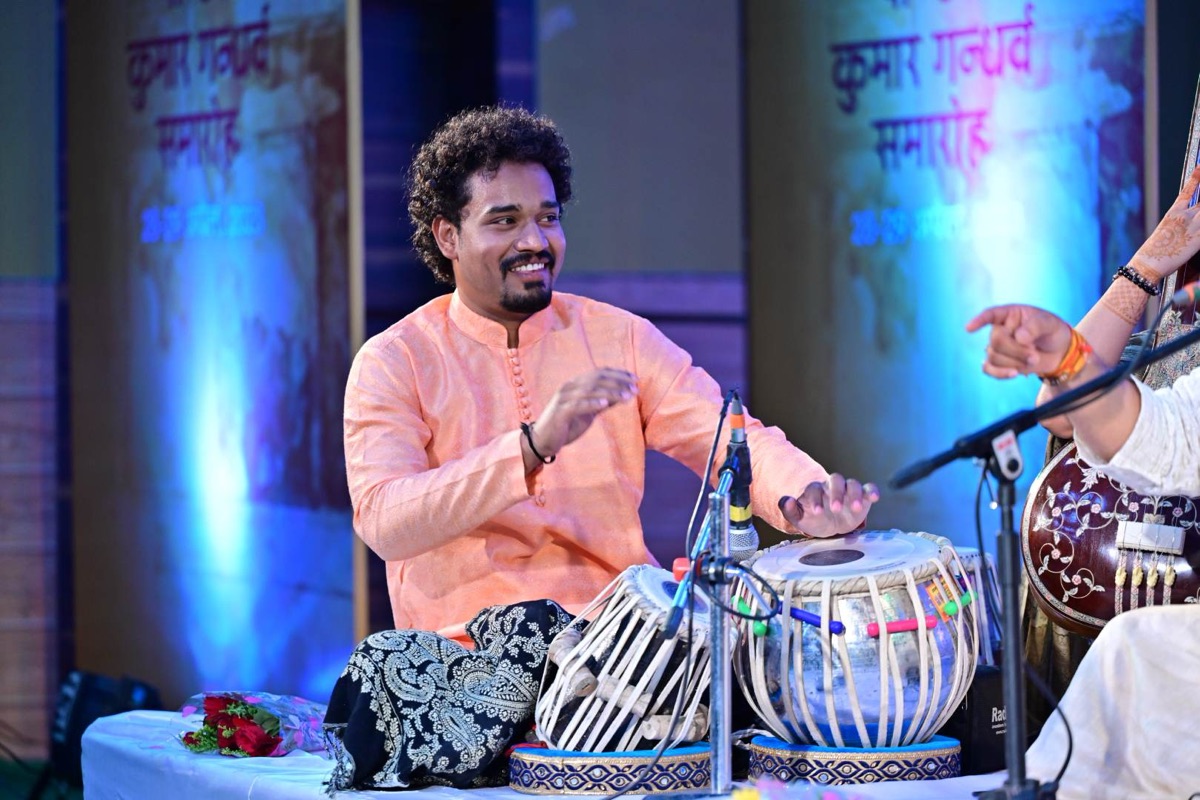
  • Abhishek MishraTabla

    Abhishek Mishra

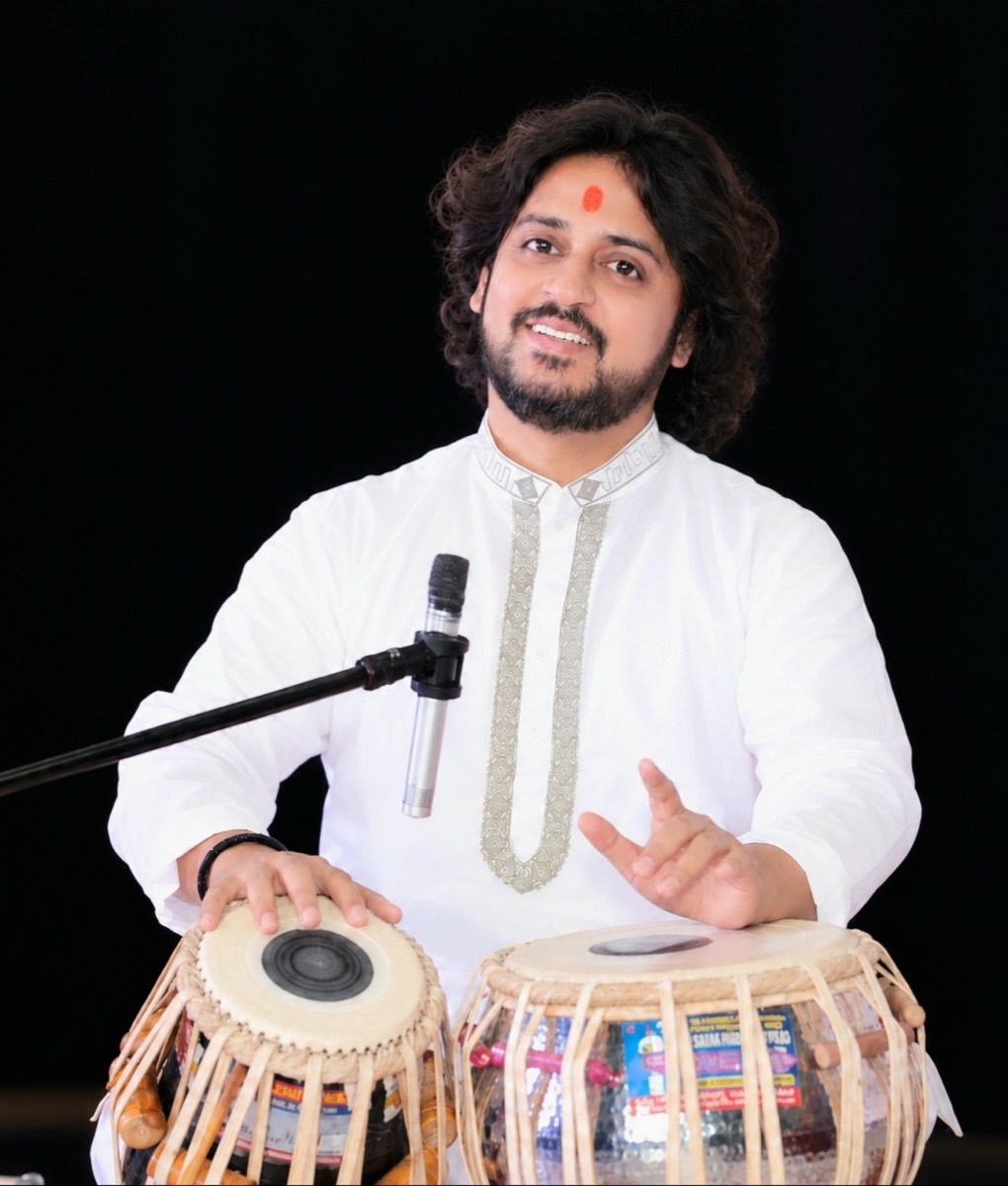
    Abhishek Mishra is a tabla player who appears in three concerts across both days, more than any other accompanist at the festival. In Hindustani music the tabla keeps the rhythmic cycle, the taal, and also converses with the main artist, answering phrases and building intensity. At The Jaipur Raga Festival he accompanies Sh. Shashank Subramanyam on Carnatic flute, the vocal jugalbandi of Sabina Islam and Sanjukta Biswas, and the closing concert of Pt. Sajan Mishra and Swaransh Mishra.

  • Dr. Pawan SemTabla

    Dr. Pawan Sem

    Dr. Pawan Sem is a tabla player who accompanies Dr. Pushkar Lele at The Jaipur Raga Festival. In Hindustani music the tabla keeps the rhythmic cycle, the taal, and supports the singer while answering and shaping the music around the voice. In devotional singing such as the nirgun bhajan, the tabla sets the pulse that carries the words. He plays in Sacred Sounds, the morning concert of nirgun bhajans on the Main Stage Lawn on the festival's second day.

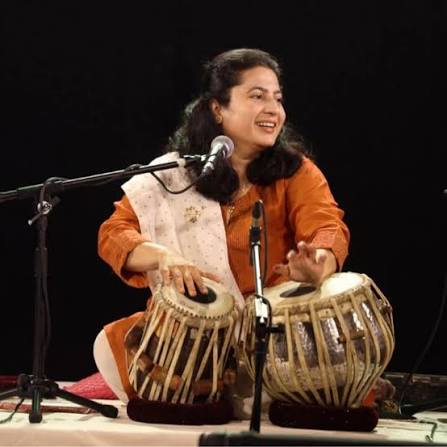
  • Mukta RasteTabla

    Mukta Raste

    Mukta Raste is a tabla player, percussionist and vocalist based in Mumbai. Born in Pune, she gave her first tabla performance at seven. She trained under gurus including Pt. Suresh Talwalkar and Pt. Arvind Mulgaonkar, and from 2016 learnt from Ustad Zakir Hussain at his tabla retreats. She holds a Master's in Music (Tabla) and received the CCRT Fellowship (2023–2025). In 2015 she founded the Taal Matrix Foundation. In a field long led by men, she performs as both soloist and accompanist. At the festival she accompanies Ustad Moinuddin Khan and Momin Khan's sarangi duet.

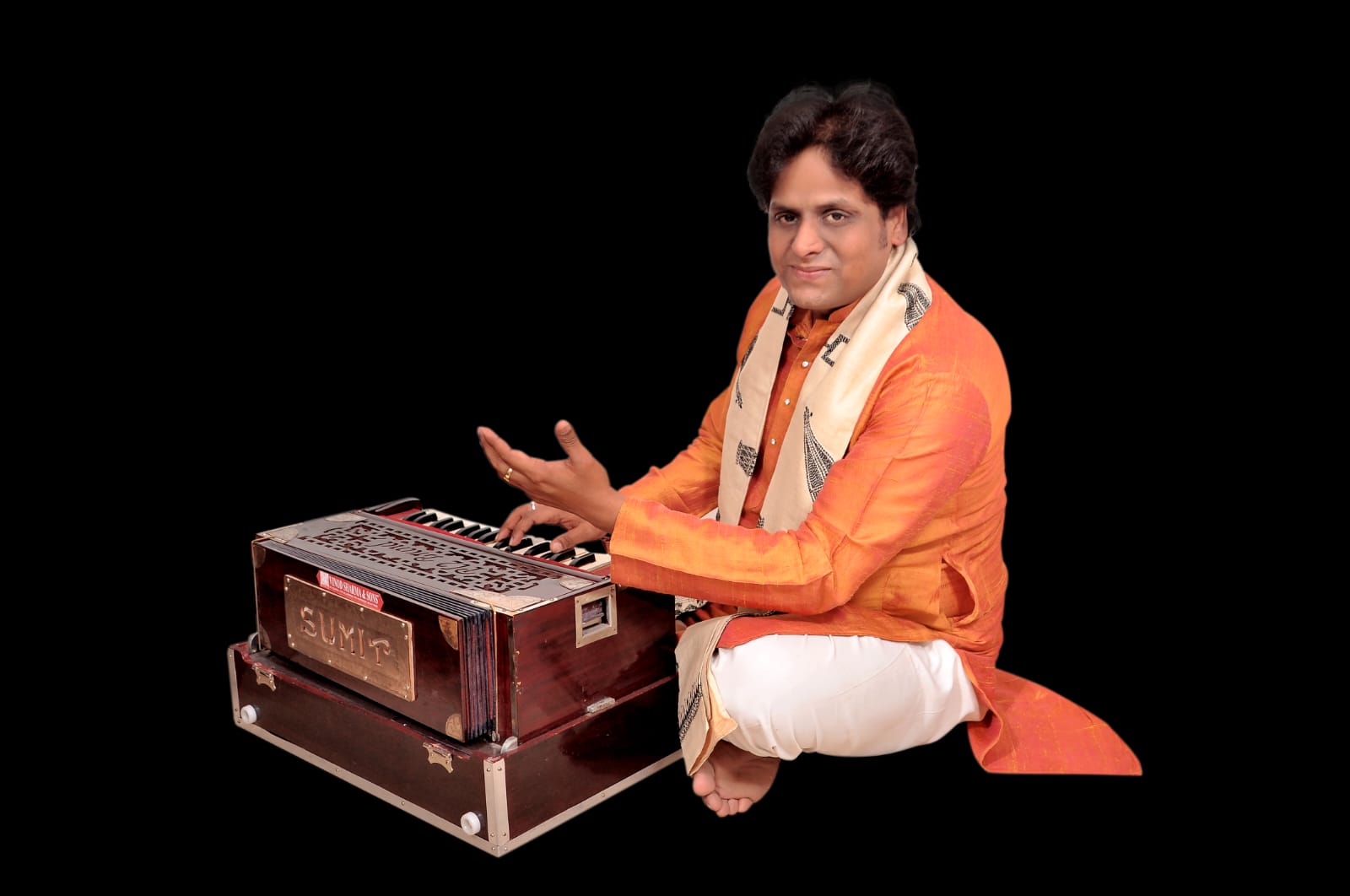
  • Pt. Sumit MishraHarmonium

    Pt. Sumit Mishra

    Sumit Mishra is a harmonium player of the Banaras gharana, from a family whose music goes back more than ten generations. He trained under his father, Pt. Sohan Lal Mishra, and his uncle, Pt. Mohan Lal Mishra. He has accompanied Pt. Rajan and Pt. Sajan Mishra, and performed regularly with the late Vidushi Girija Devi. He has played at festivals including Sankat Mochan, Saptak, Dover Lane and the ITC Sangeet Sammelan. At The Jaipur Raga Festival he accompanies Dr. Pushkar Lele's Sacred Sounds, a morning concert of nirgun bhajans.

  • Arunabh Jyoti MalakarKhol

    Arunabh Jyoti Malakar

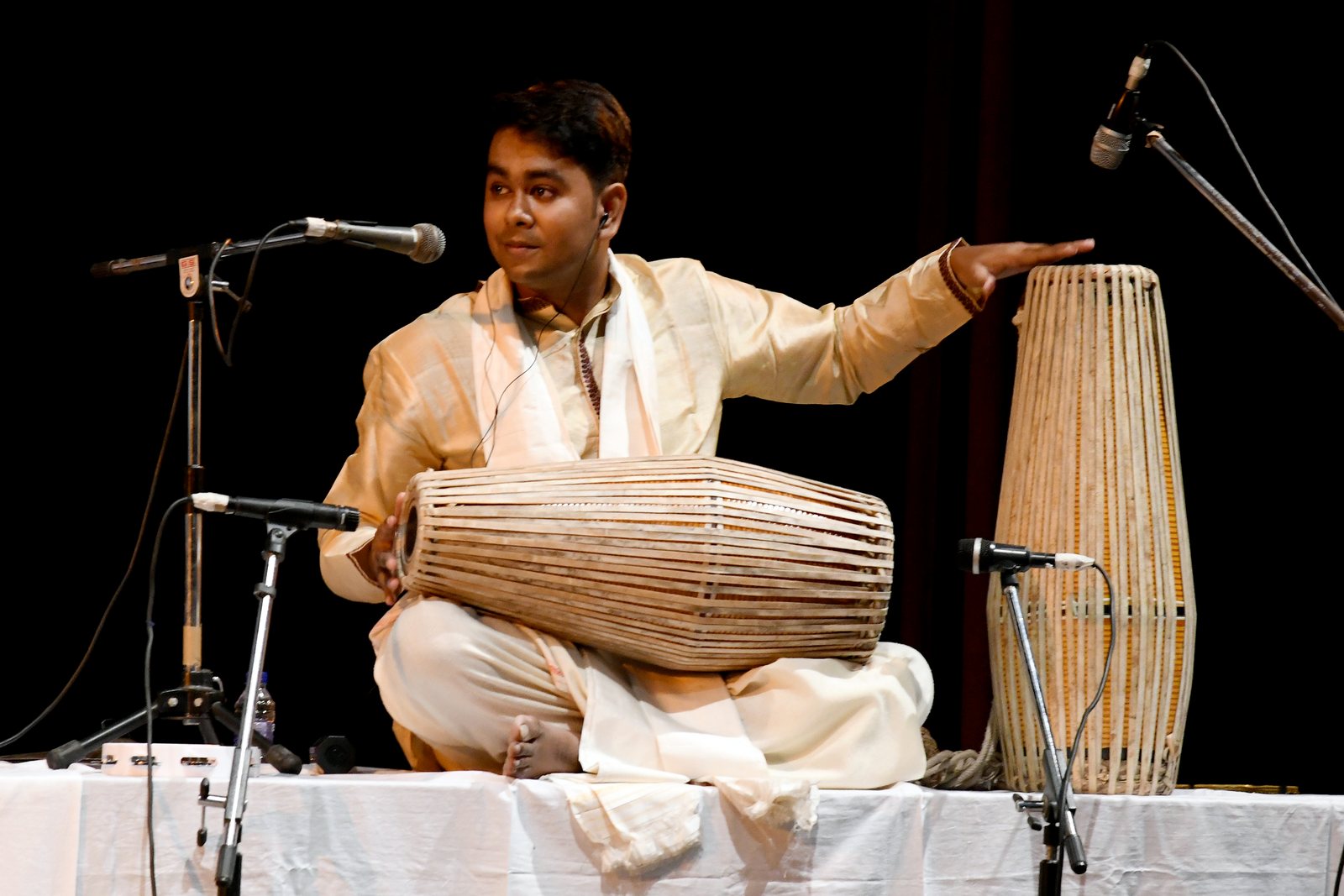
    Arunabh Jyoti Malakar is an acclaimed khol player from Guwahati, Assam, belonging to a distinguished family of Sattriya artists. He is the grandson of Sattriya maestro Late Raseshwar Saikia Barbayan and the son of Dipen Chandra Malakar and Sangeet Natak Akademi Awardee Ranjumoni Saikia.

  • Nikhil Kumar BeheraFlute

    Nikhil Kumar Behera

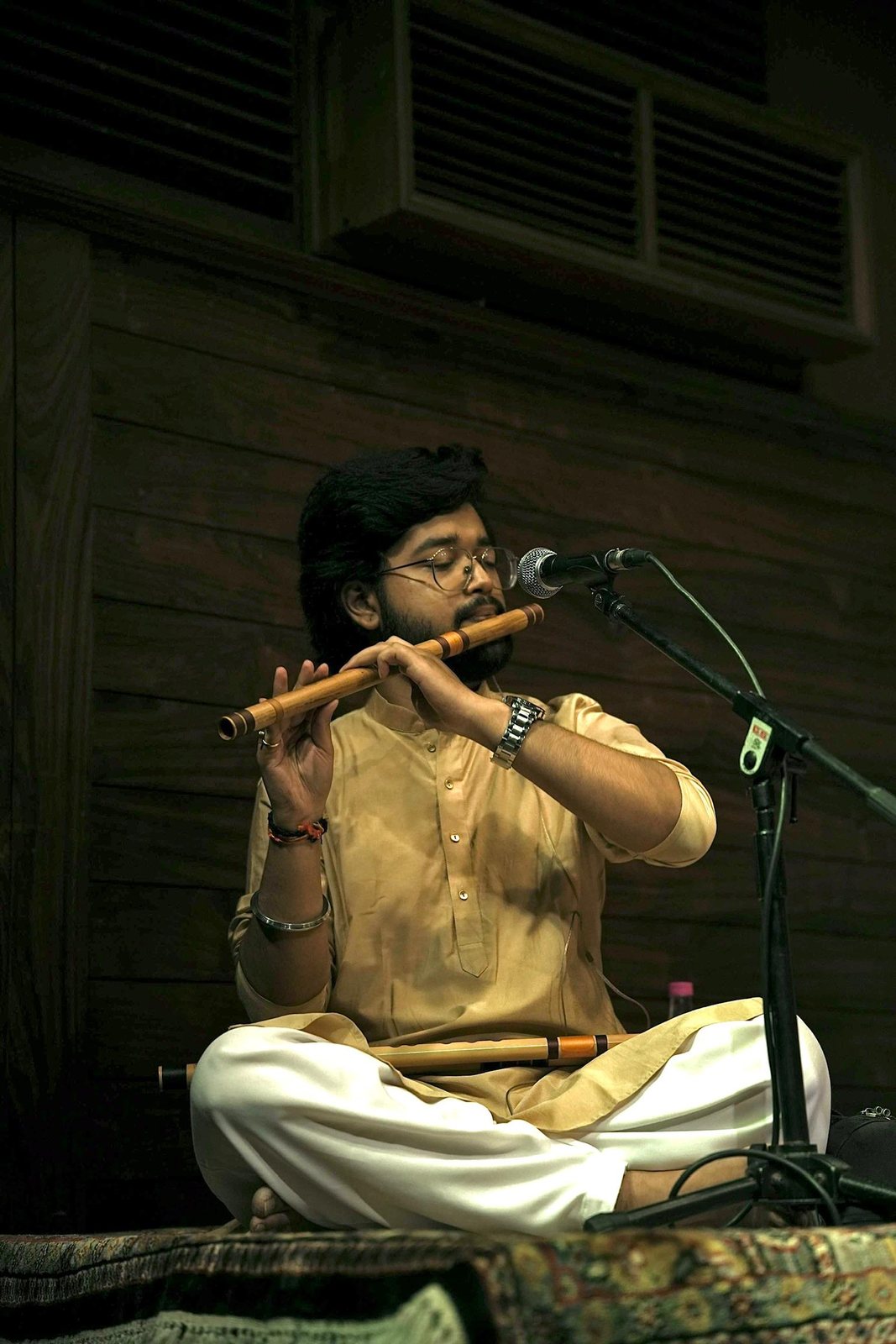
    Nikhil Kumar Behera is a versatile third-generation artist and musician from New Delhi, celebrated as an accomplished flutist, composer, and guitarist with over a decade of professional experience.

More artists to be announced.

Explore the festival schedule

Schedule

Two days, hour by hour

All times are in Indian Standard Time (IST). Download the full two-day programme to keep with you.

Download schedule (PDF)

Day 1 · Saturday 28 November

  • 10:00 – 11:00 AMInaugural ceremonyCeremony—Venue: Main Stage Lawn
  • 11:30 AM – 1:00 PMCarnatic fluteConcertSh. Shashank Subramanyam · tabla: Abhishek Mishra · mridangam: Phalgun ParupalliVenue: Main Stage Lawn
  • 1:00 – 2:00 PMLunch and booths—
  • 2:00 – 2:45 PMInstrument making demoWorkshopNaeem, sitar makerVenue: Open lawns / Main Stage Lawn
  • 3:00 – 3:45 PMMusic appreciation workshopWorkshopDr. Pushkar LeleVenue: Main Stage Lawn
  • 4:00 – 4:45 PMTea and booths—
  • 5:00 – 6:30 PMVocal jugalbandiBaithakBaithak ticketSabina Islam & Sanjukta Biswas · tabla: Abhishek Mishra · harmonium: Rajendra BannerjeeVenue: Baithak
  • 7:00 – 8:30 PMKathakConcertPt. Rajendra GanganiVenue: Main Stage Lawn

Tickets

Choose your pass

VIP Patron

1 day (Sat 28 or Sun 29)

₹9,000

2-day pass

₹16,500

Main stage
Reserved premium seat, rows 1–2
Baithak
Reserved seat
Also includes
  • Curated heritage lunch at Narain Niwas
  • Patron Lounge
  • High tea and snacks
  • Valet parking
  • Separate check-in desk
  • A volunteer to help through the day

VIP

1 day (Sat 28 or Sun 29)

₹4,000

2-day pass

₹7,000

Main stage
Reserved seat, rows 3–5
Baithak
Yes
Also includes
  • VIP Lounge
  • Tea, coffee and snacks
  • Valet parking
  • Separate check-in desk

GA + Baithak

1 day (Sat 28 or Sun 29)

₹1,000

2-day pass

₹1,800

Main stage
GA block
Baithak
All baithak sessions

General Admission

1 day (Sat 28 or Sun 29)

₹600

2-day pass

₹1,000

Main stage
GA block, first come first served
Baithak
No

Student

1 day (Sat 28 or Sun 29)

₹150

2-day pass

₹200

Main stage
GA block
Baithak
No
Also includes
  • Booths and open festival areas
  • Student ID required

Baithak seating is limited and first come, first served. Tickets are non-refundable.

Venue

Narain Niwas Palace

Narain Singh Circle, Kanota Bagh, Jaipur 302004

Open in Google Maps

Site map Coming soon

  • Main Stage Lawn
  • Imperial Hall
  • Banquet Hall
  • Baithak
  • Open lawns
  • Poolside booths
Festival areas: Main Stage Lawn, Imperial Hall, Banquet Hall, Baithak, Open lawns, Poolside booths

Plan your visit

Good to know

Timings
Gates open at 9 AM. Sessions run 10 AM – 8:30 PM.
Parking
Valet parking inside the venue is only for VIP Patron and VIP pass holders. There is no other visitor parking; please come by cab or auto-rickshaw.
Entry
Show your ticket on your phone or printed. Student tickets need a valid student ID.
Children
Children under 8 are not admitted. Children 8 and above need a ticket and a student ID.
Food
To be announced
Accessibility
To be announced
Concert etiquette
Keep phones silent, no flash photography, enter and leave between pieces.

About

Why The Jaipur Raga exists

Indian classical music is one of the world's richest artistic traditions, yet many of the artists who sustain it have few chances to perform and grow. The Jaipur Raga exists to strengthen that ecosystem: a curated platform where artists across generations share the stage, and where new audiences discover a tradition that remains vibrant and deeply relevant today.

01

Supporting Artists

Creating meaningful opportunities for musicians to perform, connect with audiences, and build lasting artistic identities.

02

Growing Audiences

Making Indian classical music accessible through thoughtfully curated performances, conversations, and immersive cultural experiences.

03

Sustaining Tradition

Ensuring India's musical heritage continues to thrive, not by preserving it as history, but by keeping it actively performed, experienced, and passed from one generation to the next.

Indian classical music has always evolved through the relationship between generations. The Jaipur Raga brings together artists whose decades of mastery shaped the tradition and musicians whose voices will define its future: an ongoing conversation between experience and mentorship, rooted in excellence.

About Kanika Pandey Foundation

FAQ

Questions, answered

Can I get a refund?
No. Tickets cannot be refunded once bought.
Can I bring children?
Children under 8 are not admitted. Children 8 and above need a ticket and a student ID.
Which tickets include the baithak?
VIP Patron, VIP and GA with baithak. Baithak seating is limited and first come, first served.
Can I park at the venue?
Only VIP Patron and VIP pass holders, through valet parking. Please come by cab or auto-rickshaw.
When do the gates open?
9 AM.
Is food available?
To be announced

Get involved

Be Part of the First Chapter

Book tickets(opens in a new tab)Partner with us Volunteer Coming soonGet updates Coming soon